|
|
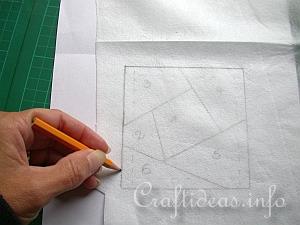
1. Lay the piece of interfacing material over the pattern and trace the lines with a pencil. You may choose to use a permanent marker so the lines are more visible.
|
|
|
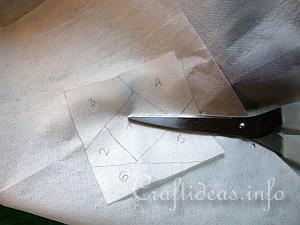
2. Cut the interfacing out exactly on the outside lines.
|
|
|
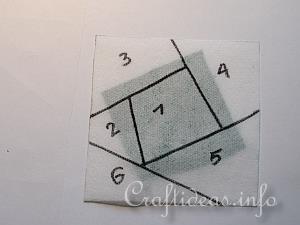
3. The topside of the material is the marked side and the bottomside is the sewing side. Lay a piece of material on the sewing side under block #1. This is how it looks like on the sewing side. The material covers all edges with a seam allowance.
|
|
|
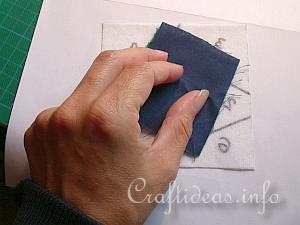
4. Lay the piece for block 2 over the first block. Line up the edges and pin in place to hold, if desired.
|
|
|
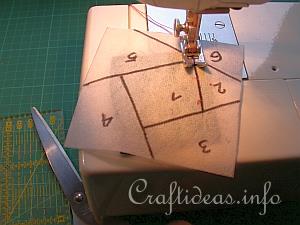
5. Turn the piece over and sew on the line between #1 and #2. End at block #3.
|
|
|
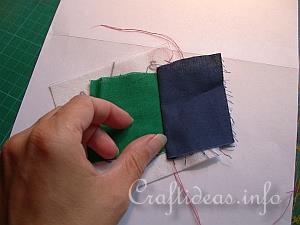
6. After sewing, turn the whole piece over and fold the pieces apart and flatten. The second piece of material should now be covering block #2 and the seam allowances should extending over the lines on all sides.
|
|
|
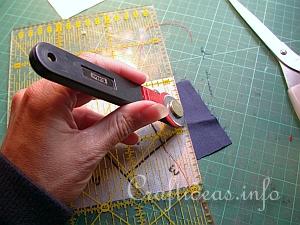
7. Cut excess material away along the outside of the block.
|
|
|
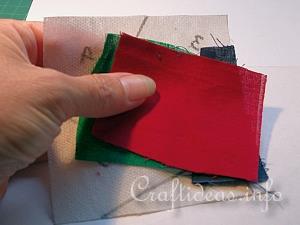
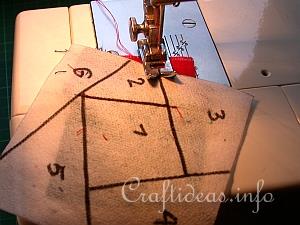
8. Add next piece of material for block #3. At least 1/2 cm should be over the line between block #2 and block #3. The line between the blocks is the sewing line. The majority of the material will lay over block #2 at the moment. Pin the pieces together.
|
|
|
9. Turn the piece of interfacing over and sew on the whole line between #2 and #3. End at block #4.
|
|
|
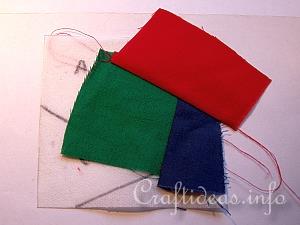
10. Turn the piece over again and fold the 3rd piece over. It will now cover block #3 with seam allowances on all sides. Press flat with your fingers.
|
|
|
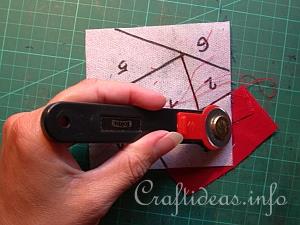
11. Cut excess material away along the outside of the block.
|
|
|
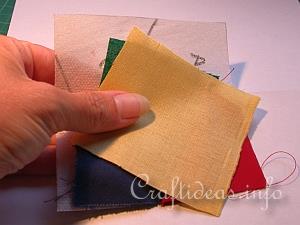
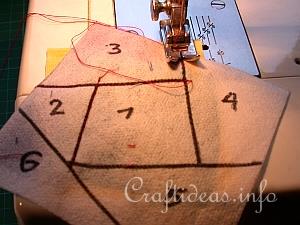
12. Add next piece of material for block #4. At least 1/2 cm should be over the line between block #3 and block #4. The line between the blocks is the sewing line. The majority of the material will lay over block #3 at the moment. Pin the pieces together.
|
|
|
13. Turn the piece of interfacing over and sew on the whole line between #3 and #4. End at block #5.
|
|
|
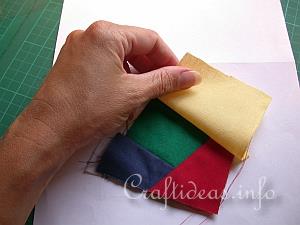
14. Turn the piece over again and fold the 4th piece over. It will now cover block #4 with seam allowances on all sides. Press flat with your fingers.
|
|
|
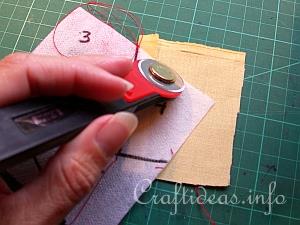
15. Cut excess material away along the outside of the block.
|
|
|
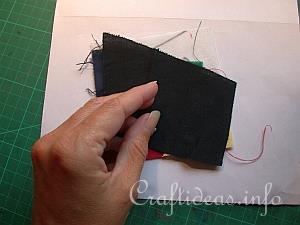
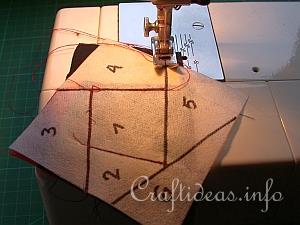
16. Add next piece of material for block #5 At least 1/2 cm should be over the line between block #4 and block #5 The line between the blocks is the sewing line. The majority of the material will lay over block #4 at the moment. Pin the pieces together.
|
|
|
17. Turn the piece of interfacing over and sew on the whole line between #4 and #5. End at block #6.
|
|
|
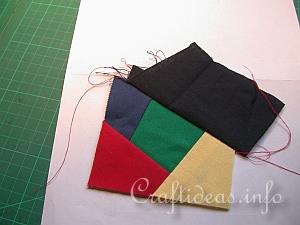
18. Turn the piece over again and fold the 5th piece over. It will now cover block #5 with seam allowances on all sides. Press flat with your fingers.
|
|
|
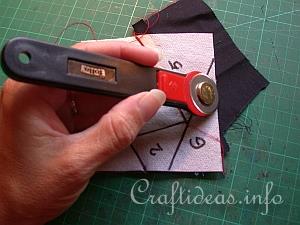
19. Cut excess material away along the outside of the block.
|
|
|
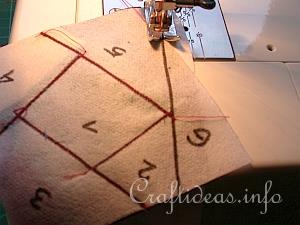
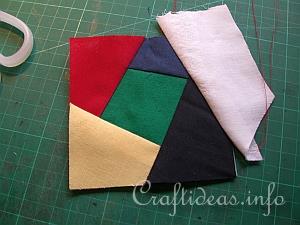
20. Add next piece of material for block #6 At least 1/2 cm should be over the line between block #5 and block #6 The line between the blocks is the sewing line. The majority of the material will lay over block #5 at the moment. Pin the pieces together.Turn the piece of interfacing over and sew on the whole line between #5 and #6. End at the edge.
|
|
|
21. Turn the piece over again and fold the 6th piece over. It will now cover block #6 with seam allowances on the outside edges. Press flat with your fingers.
|
|
|
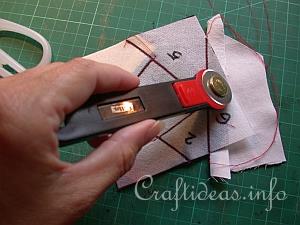
22. Cut excess material away along the outside of the block.
|
|
|
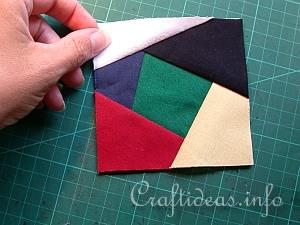
23. The finished block!
|